


Online Therapy for Children With Anxiety and OCD


Accessible for Families






What Anxiety and OCD Look Like in Children
Signs at Home
Signs in School
Signs It's More Than a Phase
Anxiety and OCD rarely show up overnight. They tend to creep in, one skipped activity or extra reassurance at a time. If you're seeing any of these at home, you're not overreacting. InStride can help when your child needs more support.

When it gets in the way

When it takes over

When it doesn't pass
How Treatment Works for Children
What the sessions look like
The heart of treatment is live sessions with your child's care team, built on proven CBT strategies, including exposure therapy, tailored to your child's age and needs. For younger children, that might mean turning an exposure into a game or challenge, drawing out a worry, celebrating brave steps with rewards, or tracking progress across the week. The goal is to make treatment engaging while your child practices facing fears and doing the things anxiety or OCD has made hard.
How anxiety and OCD are explained
Your child learns how anxiety and OCD can act like a false alarm, sending a danger signal even when they’re safe. For younger children, we may make these ideas easier to understand by giving anxiety or OCD a name or character, helping them see it as separate from who they are. We also use child-friendly examples to teach common thinking patterns, like a “fortune teller” that predicts something bad will happen or a “mind reader” that assumes they know what someone else is thinking.
What an exposure can look like
Exposure helps your child gradually practice facing fears instead of avoiding them. Your child and their care team will create a “bravery ladder,” starting with more manageable steps and working up to harder ones. For example, a child who is afraid of speaking up in class might start by saying hello to their teacher, then answering a question they know, and finally raising their hand even when they might get it wrong.
How progress gets recognized
The goal isn't to get rid of anxiety, it's to stop it from getting in the way of what matters to your child. Every step and skill practiced is worth celebrating, because effort is what treatment is built on.

What a Week of Treatment Looks Like
A typical week blends individual therapy, exposure coaching, psychiatry, and group support, all working from the same plan. Sessions are spaced to give your child real-world practice between them.
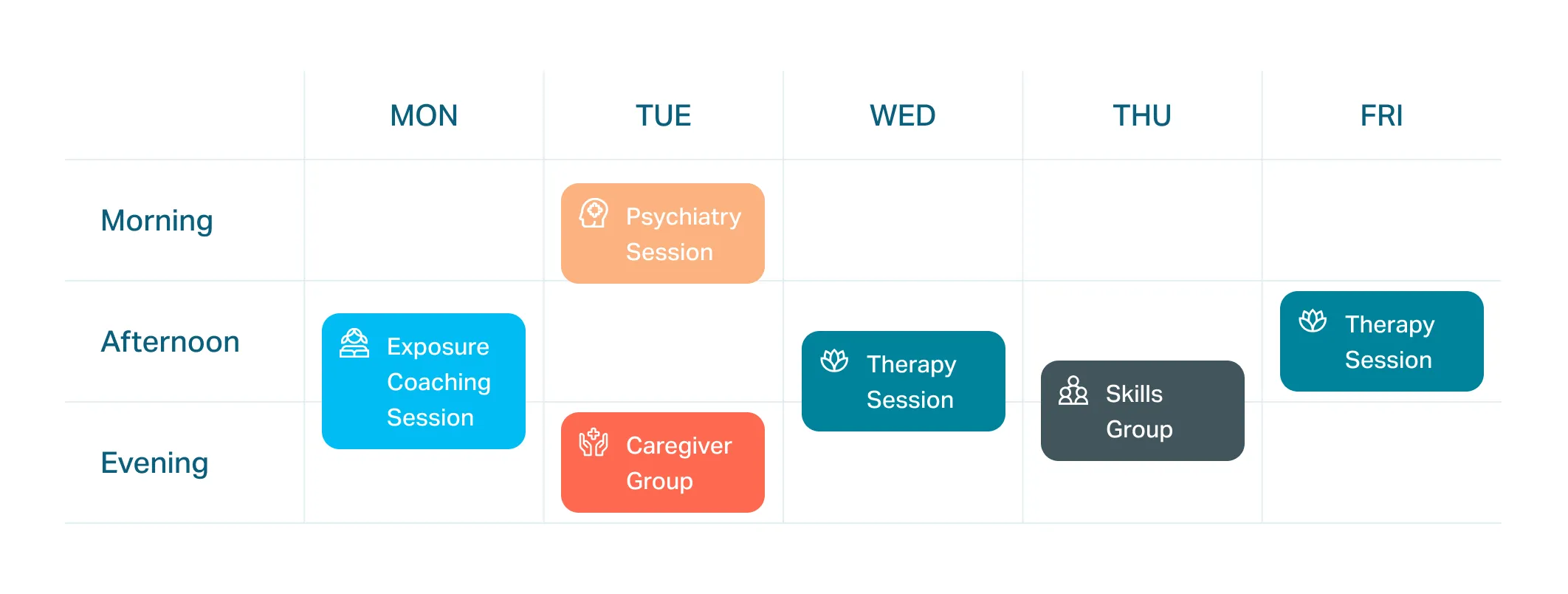
*Illustrative Phase 1 schedule. Session frequency decreases in Phase 2. Every care plan is personalized to your child’s needs, age, and goals, and your therapist adjusts it as they reach milestones.
What Progress Looks Like for Children at InStride
average wait time between application acceptance and meeting with an InStride clinician*
reported reduction in anxiety symptoms, with significant reductions observed as early as two months*
of graduates experience clinical improvement*
caregivers/parents report reduction in their own strain*
caregivers/parents reported reduction in absenteeism from work*
would recommend InStride to a friend*
Your Child's Care Team
Therapist

Exposure coach

Psychiatrist

Parent/Caregiver

How Parents and Caregivers Are Part of Treatment
Parents and caregivers play an essential role in treatment. Through family sessions, parent and caregiver groups, and guidance from your child’s care team, you’ll learn strategies to use at home between appointments.

What We Treat in Children
Anxiety and OCD show up differently in every child. InStride treats the whole spectrum, from the familiar presentations to the ones that often go overlooked.


Lasting Change for Your Child
Progress isn't a straight line, and it isn't about removing anxiety, OCD, or related conditions. It means returning to school, friendships, and everyday life, one brave step at a time.
Frequently Asked Questions
Does my child need a formal diagnosis to apply?

No. Our team completes a full evaluation and determines whether InStride is the right fit. If anxiety or OCD are primary, even without a formal label, the evaluation will clarify what's happening and what makes sense next.
Therapy has been tried before and it didn't work. Why would this be different?
Anxiety and OCD are treatable, but they often require a structured, skills-based approach that goes beyond talk therapy. InStride’s program brings together a dedicated therapist, exposure coach, and psychiatrist working as one coordinated care team. This integrated approach helps your child build and practice the skills they need in their daily lives.
How long does treatment last?
Typically 4 to 8 months. Most children see meaningful progress within the first two months. Treatment is built around real progress, not a fixed calendar.
Is my child too young for exposure therapy, and will it be too much for them?
No. Facing fears is broken into small steps and taken one at a time, so your child is never asked to do too much at once. They start with a manageable step and only move up when they're ready, with your whole family and their coach guiding and encouraging them along the way. Organizations like the American Psychological Association (APA) recognize it as a scientifically demonstrated, helpful treatment or treatment component.
Will treatment interfere with the school day?
InStride is fully virtual and built to fit around school schedules. Most families schedule sessions in the morning, after school, or during a free period. The goal is more presence at school and in life.
Will my child have to talk to a stranger on a screen?
Your child works with the same small, dedicated team throughout treatment: a therapist, a coach, and a psychiatrist they get to know over time. The relationship is built gradually, at your child's pace, so the people on the screen become familiar faces your child feels comfortable with, not strangers they have to open up to on day one.