


Online Therapy for Young Adults With Anxiety and OCD


Care Within Reach






What Anxiety and OCD Look Like in Young Adults
Daily Life and Relationships
College and Work
Signs It’s Something More Than Growing Pains
A few signs that anxiety or OCD has moved past everyday stress. When these moments start adding up, it may be time for more support.

When it gets in the way

When it runs the show

When it doesn't pass
How Treatment Works for Young Adults
Your plan with your priorities
Your care team works closely with you to build a plan around what you value and want most. Everyone’s path looks different, so the plan focuses on where anxiety or OCD is actually getting in the way.
What an exposure looks like
Exposure means gradually practicing the things anxiety or OCD has made hard, at a pace that feels right for you. Your plan starts small and builds, maybe from speaking once in a seminar, to asking a question, to leading it. You choose what you’re willing to try, with your coach alongside you.
The life skills part
Anxiety and OCD can quietly hold back the everyday parts of growing up, like waking up on time, managing money, or living on your own. With your care team, you take an honest look at where you are with these, and build the independence anxiety has been delaying. The goal is a life where anxiety and OCD no longer run the show.
A team that’s direct with you
Your care team is direct with you, and they invite you to be direct right back, about what’s working, what isn’t, and how they can best support you. You’re a key member of your own team, and the plan stays built around your goals.

What a Week of Treatment Looks Like
Your week is built from one-on-one therapy, exposure coaching, and psychiatry, delivered by a team working from one plan. Sessions are paced to leave room for real life in between.
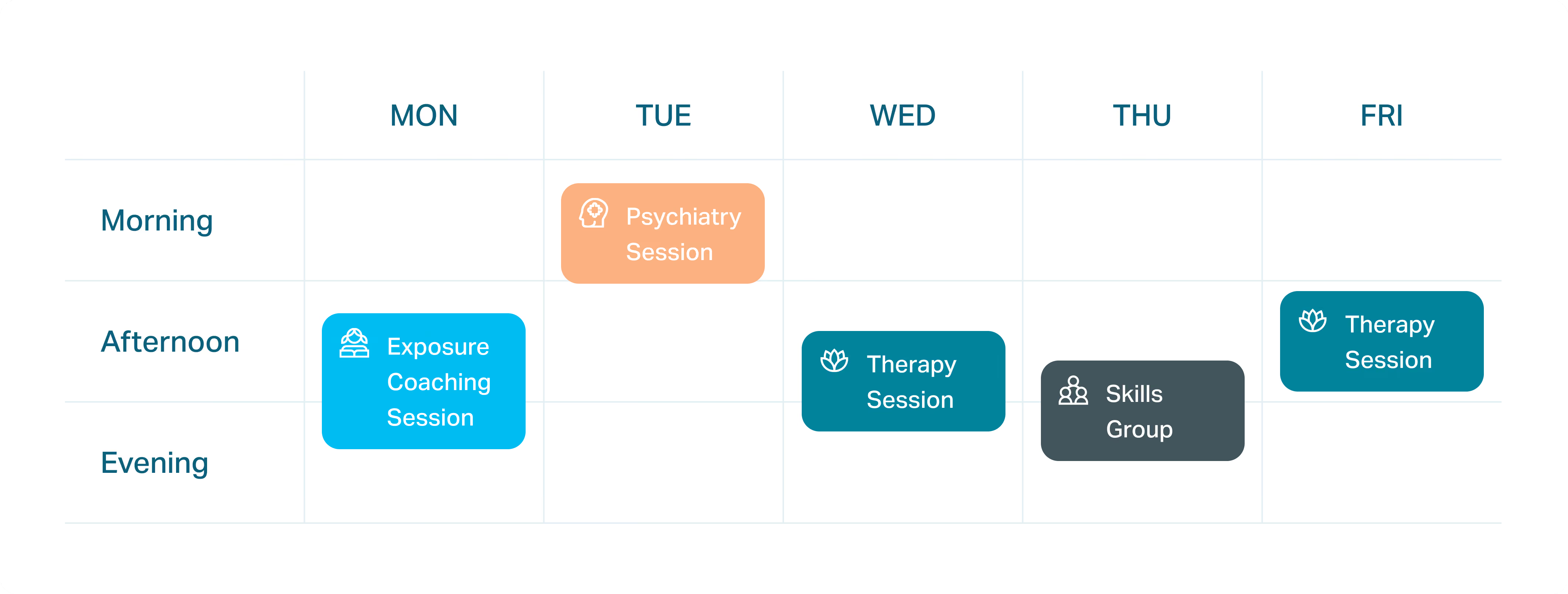
*Illustrative Phase 1 schedule. Session frequency decreases in Phase 2. Every care plan is personalized to individual needs, age, and goals, and the therapist adjusts it as milestones are reached.
Who You Want Involved
Your support network might include your chosen family, parents, a partner, roommates, or friends, whoever you actually turn to. You choose who to bring in, and how much.

Your Care Team
Therapist

Exposure coach

Psychiatrist

You

What Progress Looks Like
of graduates experience clinical improvement*
reported reduction in anxiety symptoms, with significant reductions observed as early as two months*
average wait time between application acceptance and meeting with an InStride clinician*
of graduates hospitalized at 12 months post-discharge*
of graduates discharged without continued therapy*
would recommend InStride to a friend*
What We Treat
Anxiety and OCD show up differently for everyone. InStride treats the whole spectrum, both the common presentations and those that are easy to miss.


Lasting Change for Young Adults With Anxiety and OCD
Hear from some of the thousands of people and families who trusted InStride with their care.
Frequently Asked Questions
What if I’m the one who noticed the problem?

That’s often exactly how it starts, and it’s a strong place to begin. Noticing that anxiety or OCD is getting in your way, and deciding to do something about it, means treatment is built around what you want from the start. You don’t need anyone else to decide for you.
Can I do this while I’m at college, and does it work across state lines?
Yes. Because treatment is fully virtual, you can do it from your dorm, apartment, or wherever you are, in any of the states we serve. Check which states InStride offers care in.
Do my parents have to be involved?
That’s up to you. At this age, you choose who’s part of your care, whether that’s parents, a partner, friends, or no one in particular. Your care team can help you bring in and coach the people you want supporting you.
Is a formal diagnosis needed to apply?
No. Our team starts with a full evaluation to understand what’s going on and whether InStride is the right fit. When anxiety or OCD is the primary concern, with or without a formal label, the evaluation helps map out the best next step.
I’ve tried therapy before and it didn’t work. Why would this be different?
A lot of people come to InStride after therapy that didn’t lead to lasting change. Anxiety and OCD often respond best to a structured, skills-based approach that goes beyond talk therapy. Your therapist, exposure coach, and psychiatrist work as one coordinated team, helping you build and practice the skills in your actual daily life.
How long does treatment last?
Treatment is purposefully time-bound, typically 4 to 8 months. Most people see meaningful progress within the first couple of months. The pace follows your own progress rather than a fixed schedule, so you build skills and get back to your life.